An Omnivore’s Diet: Jane Schoenbrun’s Millennial Taste, and Mine
In which I try to reckon with why I am the way that I am. Maybe you’re that way too.
Spoilers for Teenage Sex and Death at Camp Miasma! You’ve been warned!
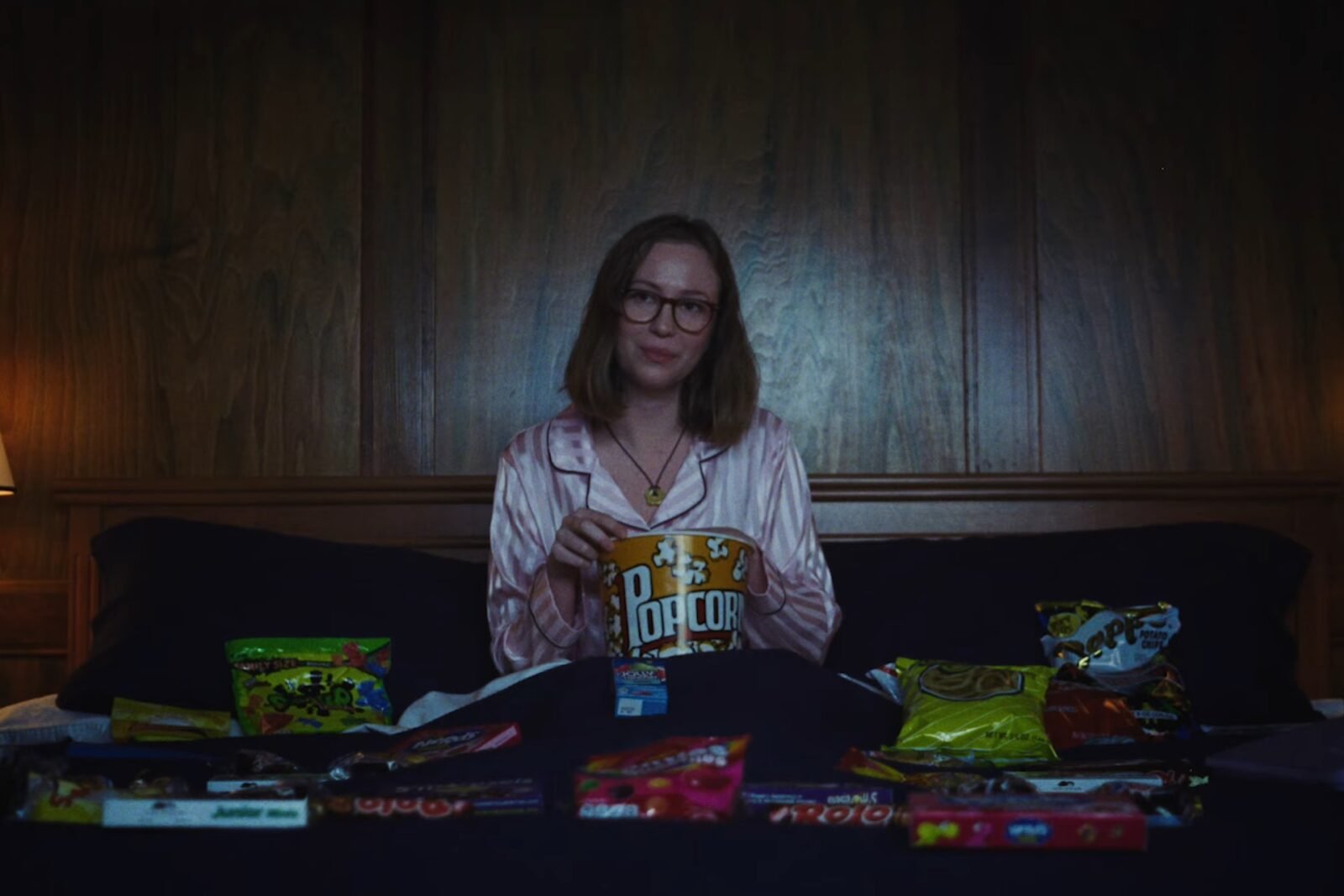
Teenage Sex and Death at Camp Miasma
In Teenage Sex and Death at Camp Miasma, Jane Schoenbrun’s phantasmagorical slasher-cum-orgasm-comedy, Hanna Einbinder’s Kris laments her childhood: “I think I watched too many movies at a young age and it fucked me up.” Right there with you, buddy. I don’t mean to speak for all millennials here, and I understand that this is a phenomenon that goes beyond generational boundaries, but there is something about that line and Kris’ experiences in the world of the film that spoke to me in a way that feels particularly millennial in nature. Indeed, the whole movie is shot through with notes, touches, hints of a life lived in conjunction with a breadth of media that was consumed and integrated without care for what those with more discerning palates might call “quality.” I think this gets at a core element of millennial media consumption in which easy (yet still curated) access to wide swaths of media history created a generation of media omnivores who are liable to find something deeply meaningful or personal in the strangest or trashiest of places.
Teenage Sex and Death is, after all, about a woman whose obsession with a junky slasher series from the 80’s (a Friday the 13th analogue) leads her to return to the film’s shooting location to entice its once-young star, Billy Presley (Gillian Anderson), to return in an “elevated” reboot of the series that she’s writing and directing. The film’s emotional crux rests on a scene from the “original” Camp Miasma movie in which the young Presley is losing her virginity as the spear-weilding, vent-helmeted Little Death killer slowly approaches to stab her lover in the back. Kris has been hung up on this scene for most of her life. We see a brief flashback of her watching it on a vhs machine hooked up to an old tube tv. Later, she reenacts it with Billy on top of her as Little Death approaches again. Afterwards, she is changed. Isn’t that how it goes? We are not in control of what speaks to us, what moves us, what changes us. We can only be spoken to, be moved, and be changed.
Similarly, millennials were not in control of what we saw, read, or heard. Our childhoods were constrained by the likes of cable companies, corporate radio stations, and Scholastic book fairs. Sure, we could break out of these constrictions if we pushed hard enough, but it was difficult to find a way to watch a movie if it wasn’t on HBO or at the local Blockbuster. We had more access to an ever-growing catalog of media than previous generations who had to rely on a few network tv stations showing a small handful of movies and tv shows a week for their media consumption diets, but we did not grow up with the ever-present past that streaming services have created in our adulthoods. We watched what was on. A lot was on, so we—or some of us, at least—watched a lot.
Let me give you a few examples from my own early years of cinephilia when I surfed between Comedy Central, Sci-Fi before it became SyFy, TCM, and Nickelodeon. Before I ever saw the Canadian horror classic Cube, I saw Cube²: Hypercube, an absurd movie that adds timey-wimey bullshit to the stuck-in-a-torture-machine premise of the first film, on the Sci-Fi channel. It was edited for content, of course, and for time and to fit your tv screen, as the disclaimer at the beginning of nearly every movie shown on the channel told us. I didn’t care. It would be a few more years before the Die Hard DVD I rented from Blockbuster would tell me about the horrors of pan-and-scan technology used to ensure that consumers wouldn’t be mad about their vhs tapes not showing them “the whole picture” they paid for. Anyways, I don’t remember much about Cube²: Hypercube now, but there is an image that has stuck with me until this day. Two side characters—the two most typically attractive—start to have sex and as the scene progresses, they begin to age and desiccate until they are left slowly spinning in the bright white void like mummies trapped in an eternal orgasm, their discarded clothes also writhing in the vacuum around them.
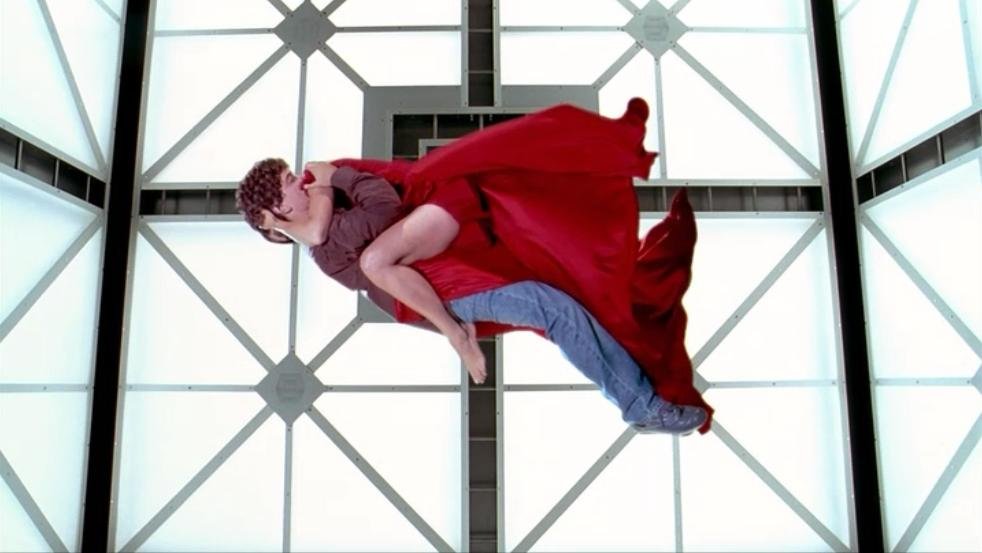
Cube²: Hypercube
What the fuck. I was like 14 or something when I first saw that scene on a tiny tv in our half-finished basement. What did I know of sex? What did I know of aging? What did I know of dead bodies? Very little! And yet, this scene had all of those and a semblance of the passion that might exist between lovers, between myself and another. Maybe one day I’d find someone for whom my lust was so powerful we’d both eagerly fuck until we died. After all, it happened in Cube²: Hypercube. Who’s to say it couldn’t happen to me? All kinds of things could happen to me. I might get trapped on a plane with a gremlin on the wing outside and nobody to believe me inside. That’s what happened in Twilight Zone: The Movie, something I accidentally saw when I was 8 or 9 and a total scaredy cat. My mom was watching it on the living room tv while I was upstairs playing in my bedroom. She called me down to watch the final segment of the movie because it had the guy from 3rd Rock from the Sun in it (John Lithgow) and that was one of my favorite shows. I guess she forgot that I was afraid of everything, and that a movie about a guy who is terrified but nobody believes that he has a good reason for it might not be a great thing for me to watch. It freaked me out!
Later that day, I left for my dad’s house and then later that night there was a loud booming sound that was seemingly coming from nowhere. It was intermittent, going between 5 minutes and a few hours between booms. Luckily my dad and stepmom also heard the booms, so at least I could just be afraid of a gremlin attack on the house rather than also being worried that nobody believed that there was a gremlin attack. Of course, I didn’t voice these fears. Why would I risk the treatment that nice 3rd Rock guy received? I just sat quietly in my room, hoping that each boom would be the last, that the furry guy I knew must be pulling the house apart from the outside would get bored and move on to a neighbor’s car or something.
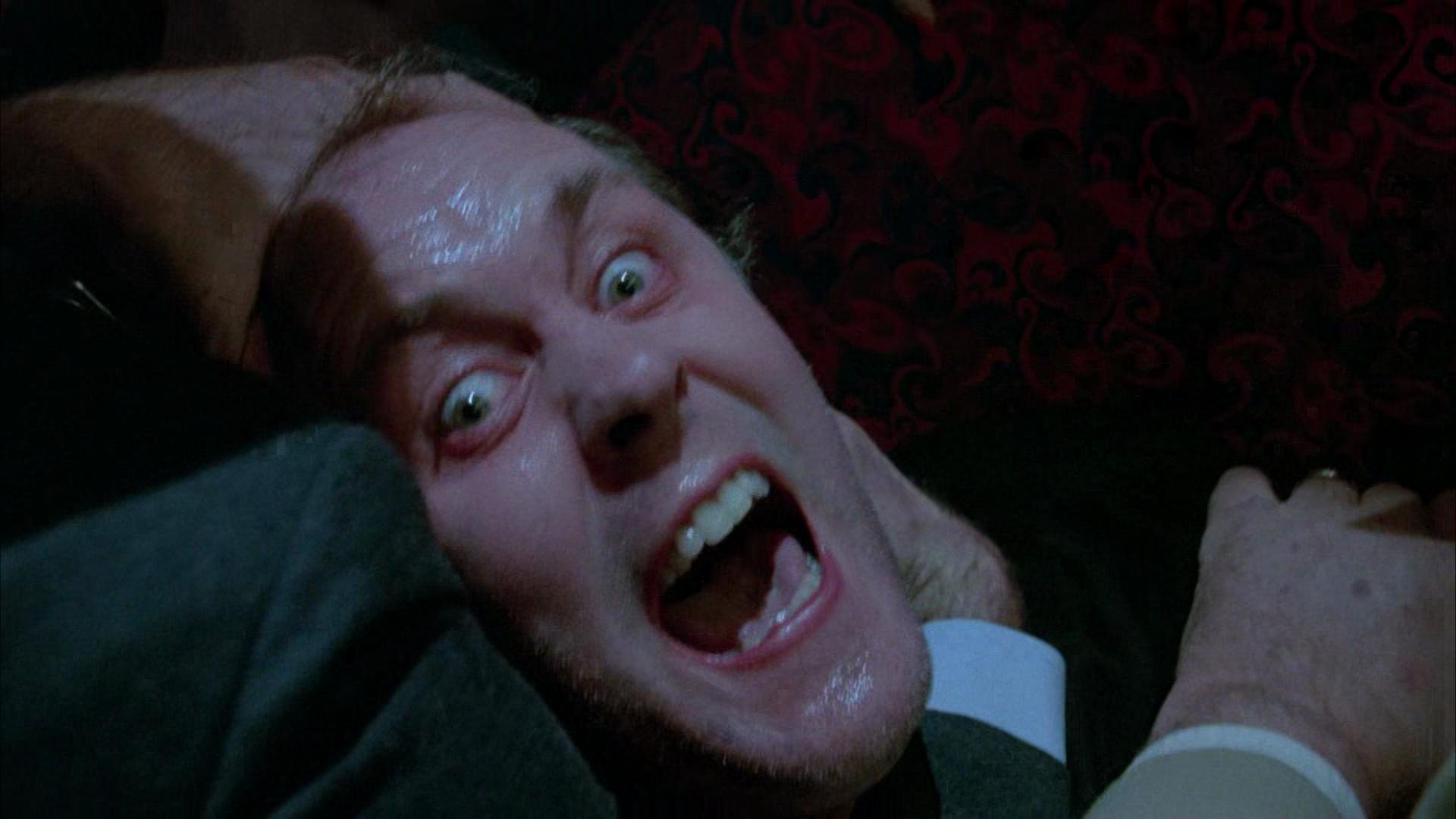
Twilight Zone: The Movie
In the morning my dad told me he figured out what was making the booming sound: a stereo in the garage hadn’t been turned off and the mic-input socket was randomly activating leading to the loud, sharp noise I had attributed to the furry gremlin I had seen on the tv. Later in my life I would learn more context for that Twilight Zone: The Movie segment. I would think about the similarities and differences between Lithgow’s performance and what William Shatner did in the same role decades earlier in the original “Nightmare at 20,000 Feet” episode of the The Twilight Zone. I would watch it knowing that George Miller’s other directorial efforts relied on the same energetic filmmaking I first saw on that terrifying day. But before I developed that larger understanding of how movies and tv worked, how they were made by people for monetary and occasionally artistic reasons, I was a scared little boy, waiting for my house to fall out of the sky because a monster bit its wings off. Our fears aren’t always rational, nor are our responses to the things we see as a kid. But those irrational things that stick in our brains do eventually make us who we are, for better or worse.
Schoenbrun’s films have thus far been explicitly about media consumption. Whether it’s the nebulous veracity of online video and the perils of forming an identity while existing on the internet, the half-remembered fantasies and nightmares spawned from trashy children’s media and the distinct feeling that you aren’t like everyone else, or the attempts to intellectualize why you like dumb slasher movies even as they villainize people like you, their films speak to their personal experiences existing in the roughly the same media ecosystem I’ve attempted to sketch out here. The limited freedom of cable and movie rental stores. The corporate radio that relied on the big record labels to feed them prepackaged stars. The internet was chatrooms and AIM, not social media as we know it now. We saw a lot, we listened to a lot, but we had no real ability to seek out quality. Cube²: Hypercube was on, so I watched it. Same with Twilight Zone: The Movie. Same with Camp Miasma.
Maybe the most millennial move is to acknowledge that a piece of media is trash without discarding the real meaning it can hold for you, the way it shaped you because you saw it at this particular moment in your life, or you heard it in this particular context. That’s why the best scene in Teenage Sex and Death is a long take that swaps between close ups and POVs of Little Death’s murderous rampage at a party in a camp cabin. We are not seeing the “movie” as it “actually exists” but rather the experience of Kris watching it alongside Billy, both of them moved in different ways towards the same emotion by the carnage on screen. The scene is scored by a frankly terrible Counting Crows song that I remember being a big hit on the adult contemporary stations I listened to as a tween (shut up, this whole essay is about how I’m uncool). The song was familiar to me, though I’m not sure I ever took in the meaning of its lyrics or thought about it except when it was playing on the radio, and not even then. It is the definition of pop culture ephemera.
When the paino-and-accordian opening of “A Long December” started and the movie kicked into half-speed to ensure we could indulge in the killings as much as we identified with the killer’s cathartic revenge I began to laugh. It’s beautiful and absurd, a juxtaposition between mawkish sentiment and over-the-top gore that creates something more that either on their own. The laugh was one of recognition, not just “I know this song” but “I know this feeling.” The elation that even a terrible song can inspire in the right circumstances. The needledrop born from consuming years of trash alongside treasure such that they become if not interchangeable at least equivalent. The omnivore’s meal can be delicious if you can recognize that what makes the candy and KFC Kris and Billy eat throughout as tasty as a gourmet dish is in where and when you eat them. And in how they remind you of how you got to the table, or movie theater seat.
