What is an Elegiac Sequel anyways?
A legacyquel by any other name would smell as sweet, wouldn’t it?
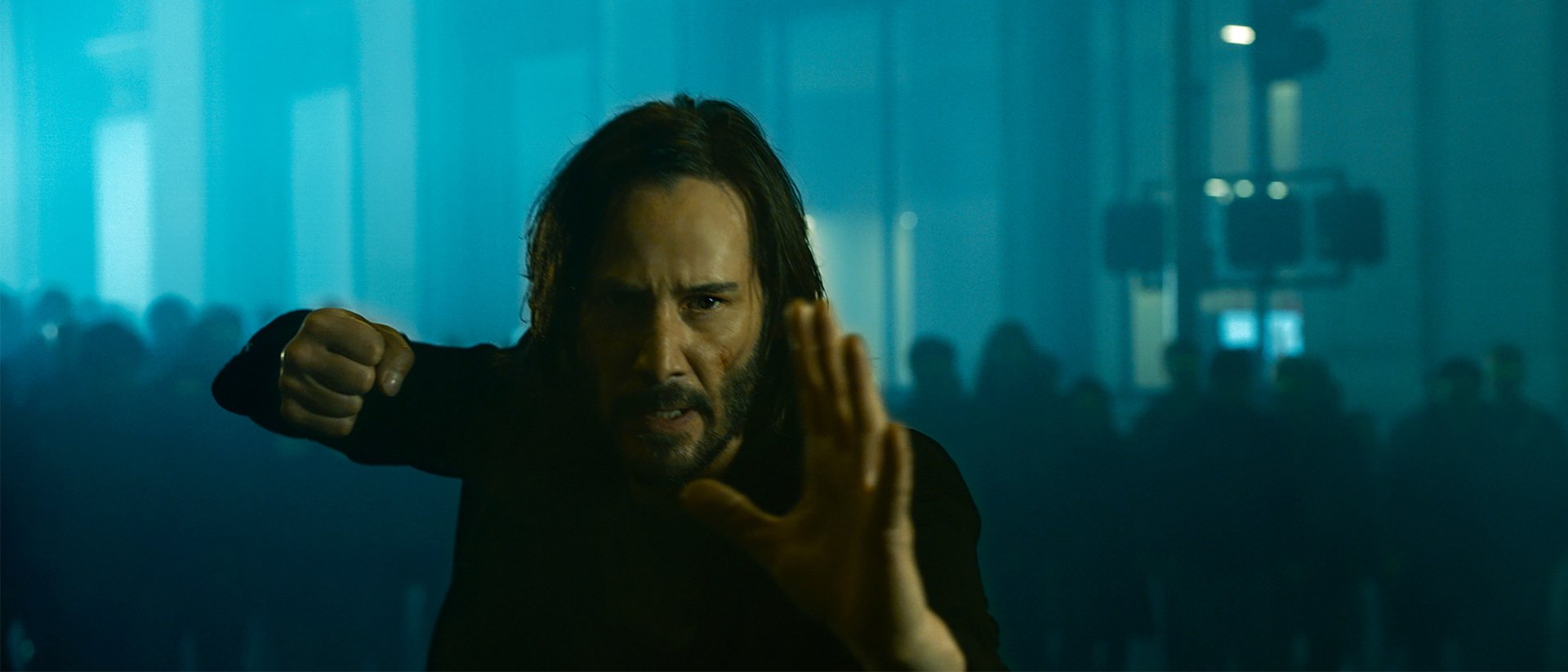
Neo in The Matrix Resurrections
When I was writing my dissertation on what is commonly called the legacyquel—or, if you’re in the Scream franchise, requel (ugh)—I was told that I should probably coin my own term for them so that I could “own” my research and, if I got lucky, it would become a term within the vast expanses of film theory. The future is not yet written, but if anyone other than me calls them what I came up with I will be very surprised. That being said, I did start to like the term I coined. Here I want to write a looser, more bloggish version of the part of my dissertation that explains why I coined the term “elegiac sequel.” I hope it will also give me a bit of a push to continue adapting segments of my dissertation into more easily accessible blog posts and, if I can keep myself to it, write some of the things I always wanted to include in the dissertation but didn’t have the time or energy to put into words. Think of it as a chiller, more fun version of a dissertation in bite-size chunks. Who doesn’t love chunks!
“While the flow of the image at 24 frames a second tends to assert a ‘now-ness’ to the picture, stillness allows access to the time of the film’s registration, its ‘then-ness’. This is the point, essentially located in the single frame, where the cinema meets the still photograph, both registering a moment of time frozen and thus fossilized.”
While I was reading a bunch of film theory for my exams (a large written and oral test you need to pass to move onto the “candidacy” or writing phase of the dissertation process), I came across a book called Death 24x a Second: Stillness and the Moving Image by Laura Mulvey. You might recognize her as the person who popularized the term “the male gaze” in her short but impactful essay “Visual Pleasure and Narrative Cinema,” which helped to popularize psychoanalytic—and feminist—film theory. In this book, she examines how home media technologies allow viewers of visual media to disrupt the propulsive force of narrative visual arts via pause, rewind, and fast-forward buttons, among others. While I don’t fully buy into psychoanalytic film theory, I do think it is fun and interesting to think in that milieu and her book is a great little investigation into what it means to watch movies at home. She describes pausing an old movie while watching it at home and going about whatever she needed to do, getting a snack or using the restroom or whatever, and returning to the paused image only to think about how all the actors on screen were likely dead now. She ties this pause—created via new-at-the-time home video technology—to the fundamental still image of the moving picture, the frozen movement that only looks like time progressing when displayed subsequently, quickly. She suggests, then, that the single frame is, in some ways, death.
“Human consciousness creates ordered time to organize the rhythms of everyday life according to the demands of society and economy, but also in recognition of the intractable nature of time itself. For human and all organic life, time marks the movement along a path to death, that is, to the stillness that represents the transformation of the animate into the inanimate. In cinema, the blending of movement and stillness touches on this point of uncertainty so that, buried in the cinema’s materiality, lies a reminder of the difficulty of understanding passing time and, ultimately, of understanding death.”
I fuck with this. I fuck with this hard. In my exams reading I read a bunch of other people who also wrote about the formal mechanics of the film image, some of whom go even further into the technical side than Mulvey does here, such as D.N. Rodowick’s fascinating delineation between the film and digital images. But Mulvey’s description of the paused image as a reminder of the stillness that makes up the moving image stuck with me and, when I was tasked to find a new term for my object of study, the legacyquel, I returned to her writing on the paused moving image. It says something about time, about narrative, and about death, frankly, that I think is fundamental to what is happening in what I eventually called the elegiac sequel.
Briefly, my criteria for an elegiac sequel to exist are:
A gap between the original release and the new entry of 10 or more years. Long enough to have the passage of time be more meaningful than a traditional sequel.
A returning actor whose visible aging can act as validation that time has indeed passed in the storyworld as much (give or take) as it has in the real world.
A big enough fan base to warrant not only the financial investment of reviving IP (Intellectual Property like Star Wars or Mad Max) but also the fan investment in the characters and the stories and worlds they exist within.
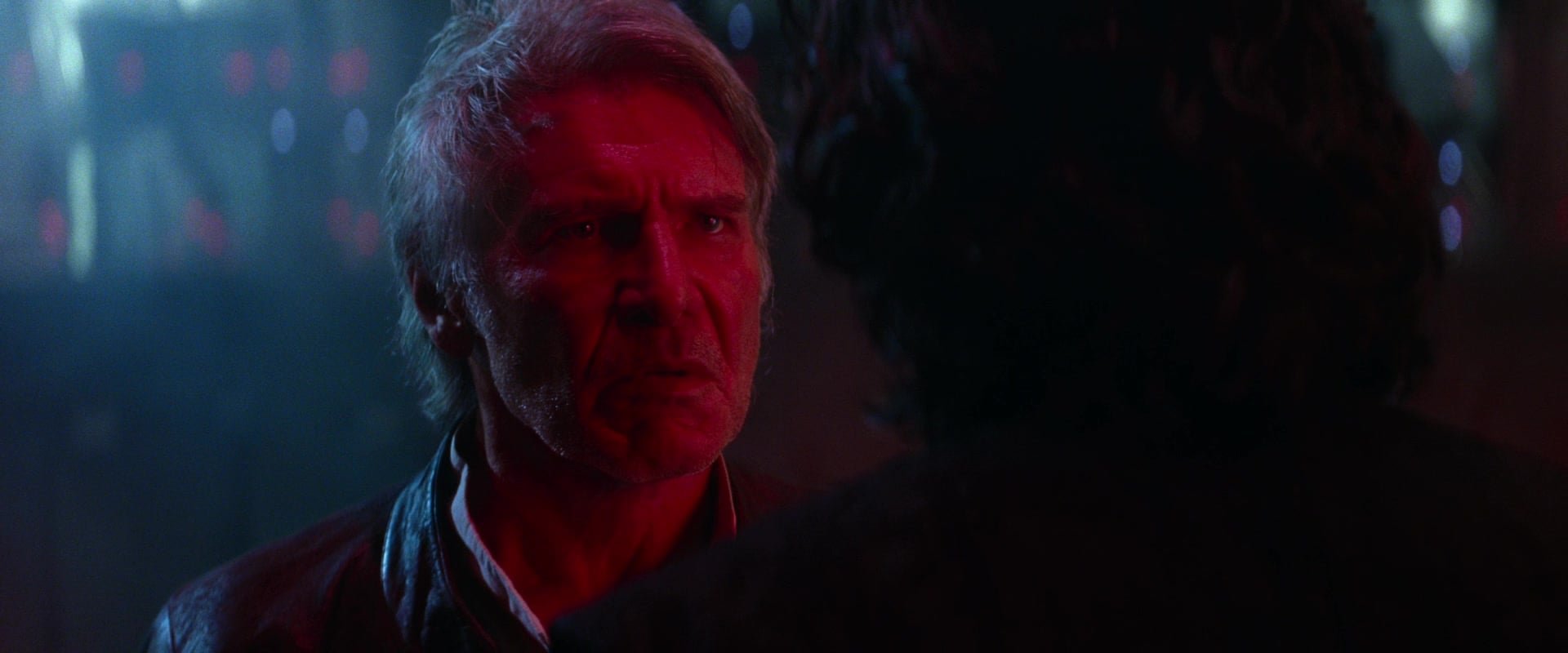
Harrison Ford’s aged face in The Force Awakens
As you can see, the idea of the passage of time is crucial for my conception of the elegiac sequel. If you’re bringing Harrison Ford back to play Han Solo, you’re going to have to reckon with the actor’s wrinklier face, his gruffer voice, his slower body, which means that time will have to have passed in the storyworld to go along with his older appearance. If the filmmakers are going to imagine what happened between the last time we saw the characters in question and the next one they’re making, they need to think about that gap, that time between one story and the next. About history, in other words. Why is the original Star Wars trilogy “about” Vietnam and WWII while the sequel trilogy is “about” incels and the returning specter of fascism? Well, we can look at the time between those movies and make some educated guesses!
“The tape creates a dialogue between the cinema of the past and video, between the special insights of a 1960s critic and the new technology that makes critics as of us all. This exchange creates a dialectical relation between the old and the new, breaking down the separation from the past from which nostalgia is derived. But at the same time, it is elegiac: there is no escape from passing time and death itself.”
And there it is. In writing about the technology that allows home video watchers to pause and reflect on the still images that make up the moving one, she says that it creates a meaningful and generative space to connect the now with the then, to think about how then became now and what might happen when now becomes no more, as it always does. That’s what those legacyquels do, or at least what they can do. In some ways there will never be a better name for them than Matt Singer’s term. They are often if not always about the legacy of the original films. But if there must be a secondary term for them, I do think that the elegiac sequel, which calls attention not only to the passing of time but also to the poetic form which can feature a speaker eulogizing someone or something that has passed out of time. This, too, fits with the structure of elegiac sequels, which often feature new, younger replacement characters for the older, “legacy” characters. In the hopefully continuing adventures of me writing about this stuff on this blog, I’ll tease out why these movies and tv shows are so interesting to me, what they can tell us about how we think about time, death, and the moving image. Hope you’ll join me.
